Iman Hai Ramadan - XnY Blog.mp3


30 Hadeeth for Ramadan

English & Arabic

All Hadeeth are from Al Bukhari and Muslim.

Imaam Abdul Majeed has checked all Hadeeth.


1 - Narrated `Abdullâh bin `Umar (may Allah be pleased with him): Allâh's Messenger (may peace be upon him) said, The month can be 29 nights (i.e. days), and do not observe Saum (fast) till you see the crescent, and if the sky is overcast, then complete the month of Sha`bân as 30 days. (Bukhari)


 - 1عَنْ عَبْدِ اللهِ بْنِ عُمَرَ رَضِيَ اللهُ عَنْهُمَا: أَنَّ رَسُولَ اللهِ صلى الله عليه وسلم قَالَ: الشَّهْرُ تِسْعٌ وَعِشْرُونَ لَيْلَةً، فَلاَ تَصُومُوا حَتَّى تَرَوْهُ، فَإِنْ غُمَّ عَلَيْكُمْ فَأَكْمِلُوا الْعِدَّةَ ثَلاَثِينَ. )البخاري(


2 - Narrated Abû Huraira (may Allah be pleased with him) : Allâh's Messenger (may peace be upon him)  said, Saum (fasting) is a shield (or a screen or a shelter from the Hellfire). So, the person observing Saum (fast) should avoid sexual relations with his wife and should not behave foolishly and impudently, and if somebody fights with him or abuses him, he should say to him twice, `I am observing Saum (fast) .' The Prophet (may peace be upon him) added, By Him in Whose Hands my soul is, the smell coming out from the mouth of a person observing Saum (fast) is better with Allâh than the smell of musk. (Allâh says about the fasting person), `He has left his food, drink and desires for My sake. The Saum (fast) is for Me, So I will reward the fasting person for it …… (Al Bukhari)


 - 2عَنْ أَبِي هُرَيْرَةَ رَضِيَ اللهُ عَنْهُ :أَنَّ رَسُولَ اللهِ صلى الله عليه وسلم قَالَ: الصِّيامُ جُنَّةٌ، فَلاَ يَرْفُثْ وَلاَ يَجْهَلْ، وَإِنِ امْرُؤٌ قَاتَلَهُ أَوْ شَاتَمَهُ، فَلْيَقُلْ إنِّي صَائِمٌ مَرَّتَيْنِ وَالَّذِي نَفْسِي بِيَدِهِ، لَخُلُوفُ فَمِ الصَّائِمِ أَطْيَبُ عِنْدَ اللهِ تَعَالَى مِنْ رِيحِ الْمِسْكِ، يَتْرُكُ طَعَامَهُ وَشَرَابَهُ وَشَهْوَتَهُ مِنْ أَجْلِي، الصِّيامُ لِي وَأَنَا أَجْزِي بِهِ....... )البخاري(


3 - Abu Hurairah, (may Allah be pleased with him) reported: Allah's Messenger (may peace be upon him) said: When there comes the month of Ramadan, the gates of Paradise are opened, and the gates of Hell are locked and the devils are chained. (Muslim)


 - 3عَنْ أَبِي هُرَيْرَةَ رَضِيَ اللَّهُ عَنْهُ أَنَّ رَسُولَ اللَّهِ صَلَّى اللَّهُ عَلَيْهِ وَسَلَّمَ قَالَ إِذَا جَاءَ رَمَضَانُ فُتِّحَتْ أَبْوَابُ الْجَنَّةِ وَغُلِّقَتْ أَبْوَابُ النَّارِ وَصُفِّدَتْ الشَّيَاطِينُ (مسلم)


4 - Narrated Abû Huraira (may Allah be pleased with him): The Prophet (may peace be upon him) said, Whoever does not give up telling lies (false statements) and acting on those lies, and evil actions etc., Allâh is not in need of his leaving his food and drink (i.e. Allâh will not accept his Saum (fasting)). (Al Bukhari)


 - 4عَنْ أَبِي هُرَيْرَةَ رَضِيَ اللهُ عَنْهُ قَالَ: قَالَ رَسُولُ اللهِ صلى الله عليه وسلم: مَنْ لَمْ يَدَعْ قَوْلَ الزُّورِ وَالْعَمَلَ بِهِ، فَلَيْسَ للهِ حَاجَةٌ في أَنْ يَدَعَ طَعَامَهُ وَشَرَابَهُ. )البخاري(


5 - Abu Sa'id Al-Khudri (may Allah be pleased with him) reported: Allah's Messenger (may peace be upon him) said: Any servant of Allah who observes one day of Fast for Allah's sake, Allah would remove his face away from the Fire of Hell a distance equivalent to seventy years. (Muslim)


- 5عَنْ أَبِي سَعِيدٍ الْخُدْرِيِّ رَضِيَ اللَّهُ عَنْهُ قَالَ قَالَ رَسُولُ اللَّهِ صَلَّى اللَّهُ عَلَيْهِ وَسَلَّمَ مَا مِنْ عَبْدٍ يَصُومُ يَوْمًا فِي سَبِيلِ اللَّهِ إِلَّا بَاعَدَ اللَّهُ بِذَلِكَ الْيَوْمِ وَجْهَهُ عَنْ النَّارِ سَبْعِينَ خَرِيفًا. (مسلم)


6 - Ibn 'Abbas (may Allah be pleased with him) reported: Allah's Messenger (may peace be upon him) was the most generous of people in charity, but he was even more generous in the month of Ramadan. Angel Gabriel (peace be upon him) used to meet him every year during the month of Ramadan until it ended, so that Allah's Messenger (may peace be upon him) could recite the Qur'an to him; and when Gabriel met Allah's Messenger (may peace be upon him) he was more generous in giving charity than the blowing wind. (Muslim)


- 6عَنْ ابْنِ عَبَّاسٍ قَالَ كَانَ رَسُولُ اللَّهِ صَلَّى اللَّهُ عَلَيْهِ وَسَلَّمَ أَجْوَدَ النَّاسِ بِالْخَيْرِ وَكَانَ أَجْوَدَ مَا يَكُونُ فِي شَهْرِ رَمَضَانَ إِنَّ جِبْرِيلَ عَلَيْهِ السَّلَام كَانَ يَلْقَاهُ فِي كُلِّ سَنَةٍ فِي رَمَضَانَ حَتَّى يَنْسَلِخَ فَيَعْرِضُ عَلَيْهِ رَسُولُ اللَّهِ صَلَّى اللَّهُ عَلَيْهِ وَسَلَّمَ الْقُرْآنَ فَإِذَا لَقِيَهُ جِبْرِيلُ كَانَ رَسُولُ اللَّهِ صَلَّى اللَّهُ عَلَيْهِ وَسَلَّمَ أَجْوَدَ بِالْخَيْرِ مِنْ الرِّيحِ الْمُرْسَلَةُِ) مسلم(


7 – Narrated Abu Huraira (may Allah be pleased with him): Allah’s Apostle (may peace be upon him) said, Whoever prayed at night the whole month of Ramadhan out of sincere faith and hoping for a reward from Allah, then all his previous sins will be forgiven. (Bukhari)


- 7عَنْ أَبِي هُرَيْرَةَ أَنَّ رَسُولَ اللَّهِ صَلَّى اللَّهُ عَلَيْهِ وَسَلَّمَ قَالَ مَنْ قَامَ رَمَضَانَ إِيمَانًا وَاحْتِسَابًا غُفِرَ لَهُ مَا تَقَدَّمَ مِنْ ذَنْبِهِ. (البخاري)


8 - Narrated Sahl bin Sa`d (may Allah be pleased with him): Allâh's Messenger (may peace be upon him) said, The people (Muslim Ummah) will remain on the right path as long as they hasten to break their fast. (Break the fast on time, without delay) (Al Bukhari)


- 8عَنْ سَهْلِ بْنِ سَعْدٍ أَنَّ رَسُولَ اللَّهِ صَلَّى اللَّهُ عَلَيْهِ وَسَلَّمَ قَالَ لَا يَزَالُ النَّاسُ بِخَيْرٍ مَا عَجَّلُوا الْفِطْرَ. )البخاري(


9 - Narrated Sahl (may Allah be pleased with him): The Prophet (may peace be upon him) said, There is a gate in Paradise called ArRaiyân, and those who observe Saum (fasts) will enter through it on the Day of Resurrection and none except them will enter through it. It will be said, `Where are those who used to observe Saum (fasts)?' They will get up, and none except them will enter through it. After their entry the gate will be closed and nobody will enter through it. (Al Bukhari)


- 9عَنْ سَهْلٍ رَضِيَ اللهُ عَنْهُ، عَنِ النَّبِيِّ صلى الله عليه وسلم قَالَ: إِنَّ في الجَنَّةِ بَابًا يُقَالُ لَهُ الرَّيَّانُ، يَدْخُلُ مِنْهُ الصَّائِمُونَ يَوْمَ الْقِيامَةِ، لاَ يَدْخُلُ مِنْهُ أَحَدٌ غَيْرُهُمْ، يُقَالُ أَيْنَ الصَّائِمُون، فَيَقُومونَ لاَ يَدْخُلُ مِنْهُ أَحَدٌ غَيْرُهُمْ، فَإِذَا دَخَلُوا أُغْلِقَ، فَلَمْ يَدْخُلْ مِنْهُ أَحَدٌ. )البخاري(


10 - Abu Salamah bin 'Abdul-Rahman reported that he asked 'A'ishah (may Allah be pleased with her) about the night Prayer (Taraweeh) of the Messenger of Allah (may peace be upon him) during the month of Ramadan. She said: The Messenger of Allah (may peace be upon him) did not observe – either in Ramadan or in any other month more than eleven rak'ahs (units of prayer) of the night Prayer (Taraweeh). He in the first instance observed four rak'ahs. Ask not about their excellence and their length (i.e. these were matchless in perfection and length). He again observed four rak'ahs, and ask not about their excellence and length. He would then observe three rak'ahs (of the Witr Prayer). 'A'ishah again reported: I asked: Messenger of Allah, do you sleep before observing the Witr Prayer? He said: O 'A'ishah, my eyes sleep but my heart does not. (Muslim)


- 10عَنْ أَبِي سَلَمَةَ بْنِ عَبْدِ الرَّحْمَنِ أَنَّهُ سَأَلَ عَائِشَةَ كَيْفَ كَانَتْ صَلَاةُ رَسُولِ اللَّهِ صَلَّى اللَّهُ عَلَيْهِ وَسَلَّمَ فِي رَمَضَانَ قَالَتْ مَا كَانَ رَسُولُ اللَّهِ صَلَّى اللَّهُ عَلَيْهِ وَسَلَّمَ يَزِيدُ فِي رَمَضَانَ وَلَا فِي غَيْرِهِ عَلَى إِحْدَى عَشْرَةَ رَكْعَةً يُصَلِّي أَرْبَعًا فَلَا تَسْأَلْ عَنْ حُسْنِهِنَّ وَطُولِهِنَّ ثُمَّ يُصَلِّي أَرْبَعًا فَلَا تَسْأَلْ عَنْ حُسْنِهِنَّ وَطُولِهِنَّ ثُمَّ يُصَلِّي ثَلَاثًا فَقَالَتْ عَائِشَةُ فَقُلْتُ يَا رَسُولَ اللَّهِ أَتَنَامُ قَبْلَ أَنْ تُوتِرَ فَقَالَ يَا عَائِشَةُ إِنَّ عَيْنَيَّ تَنَامَانِ وَلَا يَنَامُ قَلْبِي.) مسلم(


11 - Abu Hurairah (may Allah be pleased with him) reported: When anyone of you gets up in the morning in a state of Fasting, he should neither have sexual relations with his wife, nor use obscene language or do any act of ignorance. And if anyone slanders him or quarrels with him, he should say: "I am fasting, I am fasting." (Muslim)


- 11عَنْ أَبِي هُرَيْرَةَ رَضِيَ اللَّهُ عَنْهُ رِوَايَةً قَالَ إِذَا أَصْبَحَ أَحَدُكُمْ يَوْمًا صَائِمًا فَلَا يَرْفُثْ وَلَا يَجْهَلْ فَإِنْ امْرُؤٌ شَاتَمَهُ أَوْ قَاتَلَهُ فَلْيَقُلْ إِنِّي صَائِمٌ إِنِّي صَائِمٌ.) مسلم(


12 – Anas (may Allah be pleased with him) reported: Allah's Messenger (may peace be upon him) said: Take Suhur (small meal before dawn); for in the Suhur there is a blessing. (Muslim)

- 12عَنْ أَنَسٍ رَضِيَ اللَّهُ عَنْهُ قَالَ قَالَ رَسُولُ اللَّهِ صَلَّى اللَّهُ عَلَيْهِ وَسَلَّمَ تَسَحَّرُوا فَإِنَّ فِي السُّحُورِ بَرَكَةً.) مسلم(


13 – Zaid Bin Thabit (may Allah be pleased with him) narrated: We took Sahur (light meal before the break of dawn) with the Messenger of Allah (may peace be upon him), we then stood up for prayer. I said, how much time was there between the two acts, he said, the time it takes to recite fifty verses of the Qur’an. (Muslim)


- 13عَنْ زَيْدِ بْنِ ثَابِتٍ رَضِيَ اللَّهُ عَنْهُ قَالَ تَسَحَّرْنَا مَعَ رَسُولِ اللَّهِ صَلَّى اللَّهُ عَلَيْهِ وَسَلَّمَ ثُمَّ قُمْنَا إِلَى الصَّلَاةِ قُلْتُ كَمْ كَانَ قَدْرُ مَا بَيْنَهُمَا قَالَ خَمْسِينَ آيَةً. (مسلم)


14 - Jabir bin 'Abdullah (may Allah be pleased with him) reported: In the course of a journey, Allah's Messenger (may peace be upon him) saw a man whom the people were crowding around and providing some shade. Upon this, he (the Prophet) asked: What is the matter with him? They said: He is a person observing Fast. Whereupon the Messenger of Allah (may peace be upon him) said: It is not righteousness that you fast while you are travelling. (Muslim)


- 14عَنْ جَابِرِ بْنِ عَبْدِ اللَّهِ رَضِيَ اللَّهُ عَنْهُمَا قَالَ كَانَ رَسُولُ اللَّهِ صَلَّى اللَّهُ عَلَيْهِ وَسَلَّمَ فِي سَفَرٍ فَرَأَى رَجُلًا قَدْ اجْتَمَعَ النَّاسُ عَلَيْهِ وَقَدْ ظُلِّلَ عَلَيْهِ فَقَالَ مَا لَهُ قَالُوا رَجُلٌ صَائِمٌ فَقَالَ رَسُولُ اللَّهِ صَلَّى اللَّهُ عَلَيْهِ وَسَلَّمَ لَيْسَ مِنْ الْبِرِّ أَنْ تَصُومُوا فِي السَّفَرِ.) مسلم(


15 - 'A'ishah (may Allah be pleased with her) reported: Hamzah bin 'Amr Al-Aslami asked the Messenger of Allah (may peace be upon him) about Fasting on a journey, and he (the Prophet) said: If you wish to fast do so, and if you prefer to break your fast you may do so. (Muslim)


- 15عَنْ عَائِشَةَ رَضِيَ اللَّهُ عَنْهَا أَنَّهَا قَالَتْ سَأَلَ حَمْزَةُ بْنُ عَمْرٍو الْأَسْلَمِيُّ رَسُولَ اللَّهِ صَلَّى اللَّهُ عَلَيْهِ وَسَلَّمَ عَنْ الصِّيَامِ فِي السَّفَرِ فَقَالَ إِنْ شِئْتَ فَصُمْ وَإِنْ شِئْتَ فَأَفْطِرْ.) مسلم(


16 - Narrated `Aisha (may Allah be pleased with her): With the start of the last ten days of Ramadân, the Prophet (may peace be upon him) used to tighten his waist-belt (i.e. work hard) and used to offer Salât (prayer) all the night, and used to keep his family awake for the Salât (prayers). (Al Bukhari)


- 16عَنْ عَائِشَةَ رَضِيَ اللهُ عَنْهَا قَالَتْ: كَانَ النَّبِيُّ صلى الله عليه وسلم إِذَا دَخَلَ الْعَشْرُ شَدَّ مِئْزَرَهُ، وَأَحْيَا لَيْلَهُ، وَأَيْقَظَ أَهْلَهُ. )البخاري(


17 - Narrated Abû Sa`id (may Allah be pleased with him) about the Night of Qadr, he said: We practised I`tikâf (seclusion in the mosque) in the middle third of the month of Ramadân with the Prophet (may peace be upon him). In the morning of the 20th of Ramadan, the Prophet (may peace be upon him) came and addressed us and said, I was informed of the date of the Night of Qadr but I was caused to forget it; so search for it in the odd nights of the last ten nights of the month of Ramadân …….  (Al Bukhari)


- 17عَنْ أَبِي سَعِيدٍ رَضِيَ اللهُ عَنْهُ قَالَ :اعْتَكَفْنَا مَعَ النَّبِيِّ صلى الله عليه وسلم الْعَشْرَ الأَوْسَطَ مِنْ رَمَضَانَ، فَخَرَجَ صَبِيحَةَ عِشْرِينَ فَخَطَبَنَا، وَقَالَ: (إِنِّي أُرِيتُ لَيْلَةَ الْقَدْرِ، ثُمَّ أُنْسِيتُهَا، أَوْ: نُسِّيتُهَا، فَالْتَمِسُوهَا في الْعَشْرِ الأَوَاخِرِ في الْوِتْرِ. )البخاري(


18 - Narrated Ibn `Abbâs (may Allah be pleased with him): The Prophet (may peace be upon him) said, Look for the lailat of Qadr (the night of power) in the last ten nights of Ramadân - on the night when nine or seven or five nights remain out of the last ten nights of Ramadân ((i.e. 21, 23, 25, (27, 29,) respectively). ( Bukhari)


- 18عَنِ ابْنِ عَبَّاسٍ رَضِيَ اللهُ عَنْهُمَا: أَنَّ النَّبِيَّ صلى الله عليه وسلم قَالَ: الْتَمِسُوهَا في الْعَشْرِ الأَوَاخِرِ مِنْ رَمَضَانَ، لَيْلَةَ الْقَدْرِ، في تَاسِعَةٍ تَبْقَى، في سَابِعَة تَبْقَى، في خَامِسَةٍ تَبْقَى. )البخاري(


19 - Narrated `Aisha (may Allah be pleased with her) the wife of the Prophet (may peace be upon him): The Prophet (may peace be upon him) used to practise I`tikâf (seclusion in the mosque) in the last ten days of Ramadân till he died and then his wives used to practise I`tikâf after him. (Al Bukhari)


- 19عَنْ عَائِشَةَ رَضِيَ اللهُ عَنْهَا، زَوْجِ النَّبِيِّ صلى الله عليه وسلم: أَنَّ النَّبِيِّ صلى الله عليه وسلم كانَ يَعْتَكِفُ الْعَشْرَ الأَوَاخِرَ مِنْ رَمَضَانَ حَتَّى تَوَفَّاهُ اللهُ، ثُمَّ اعْتَكَفَ أَزْوَاجُهُ مِنْ بَعْدِهِ. )البخاري(


20 - Narrated `Aisha (may Allah be pleased with her), the wife of the Prophet (may peace be upon him) : While Allâh's Messenger (may peace be upon him) was in I’tikaf (seclusion in the mosque) he used to put his head in the house (their house was right next to the Prophet’s mosque) so that I could comb and oil his hair. Whenever he was in I`tikâf he never used to enter the house except for an urgent need. (Bukhari)


- 20عَنْ عَائِشَةَ رَضِيَ اللهُ عَنْهَا قَالَتْ: وَإِنْ كَانَ رَسُولُ اللهِ صلى الله عليه وسلم لَيُدْخِلُ عَلَيَّ رَأْسَهُ، وَهُوَ في المَسْجِدِ، فَأُرَجِّلهُ، وَكَانَ لاَ يَدْخُلُ الْبَيْتَ إِلاَّ لِحَاجَةٍ إِذَا كانَ مُعْتَكِفًا. )البخاري(


21 - Abu Hurairah (may Allah be pleased with him) reported: Allah's Messenger (may peace be upon him) said: If anyone forgets that he is fasting and eats or drinks, he should complete his Fast (i.e. don’t stop fasting) for it was Allah Who fed him and gave him drink. (Muslim)


- 21عَنْ أَبِي هُرَيْرَةَ رَضِيَ اللَّهُ عَنْهُ قَالَ قَالَ رَسُولُ اللَّهِ صَلَّى اللَّهُ عَلَيْهِ وَسَلَّمَ مَنْ نَسِيَ وَهُوَ صَائِمٌ فَأَكَلَ أَوْ شَرِبَ فَلْيُتِمَّ صَوْمَهُ فَإِنَّمَا أَطْعَمَهُ اللَّهُ وَسَقَاهُ.) مسلم(


22 – Narrated ‘Amir Bin Rabi’a (may Allah be pleased with him): I saw the Prophet (may peace be upon him) cleaning his teeth with Siwak (small branch of a tree) while he was fasting so many times as I cannot count. (Bukhari)


- 22عَنْ عَامِرِ بْنِ رَبِيعَةَ قَالَ رَأَيْتُ النَّبِيَّ صَلَّى اللَّهُ عَلَيْهِ وَسَلَّمَ يَسْتَاكُ وَهُوَ صَائِمٌ مَا لَا أُحْصِي أَوْ أَعُدُّ. (البخاري)


23 - 'A'ishah (may Allah be pleased with her) narrated: The Messenger of Allah (may peace be upon him) kissed one of his wives while he was fasting, and then she ('A'ishah) smiled as she was narrating. (Muslim)


- 23عَنْ عَائِشَةَ رَضِيَ اللَّهُ عَنْهَا قَالَتْ كَانَ رَسُولُ اللَّهِ صَلَّى اللَّهُ عَلَيْهِ وَسَلَّمَ يُقَبِّلُ إِحْدَى نِسَائِهِ وَهُوَ صَائِمٌ ثُمَّ تَضْحَكُ.) مسلم(


24 - 'A'ishah and Umm Salamah (may Allah be pleased with them) reported: The Prophet (may peace be upon him) woke up in the morning in a state of janabah (major impurity, i.e. after sexual relations with his wife) which was not due to the wet dream and then observed the Fast. (Muslim)


- 24عَنْ عَائِشَةَ وَأُمِّ سَلَمَةَ رَضِيَ اللَّهُ عَنْهُمَا قَالَتَا كَانَ النَّبِيُّ صَلَّى اللَّهُ عَلَيْهِ وَسَلَّمَ يُصْبِحُ جُنُبًا مِنْ غَيْرِ حُلُمٍ ثُمَّ يَصُومُ.) مسلم(


25 - Abu Hurairah (may Allah be pleased with him) reported: A person came to the Messenger of Allah (may peace be upon him) and said: Messenger of Allah, I am ruined. He (the Prophet) asked: What has brought about your ruin? He said: I have had intercourse with my wife during the month of Ramadan. Upon this he (the Prophet) asked: Can you set a slave free? He said: No. He (the Prophet) again asked: Can you fast for two consecutive months? He said: No. He (the Prophet) asked: Can you provide food to sixty poor people? He said: No. He then sat down and (in the meanwhile) there was brought to the Messenger of Allah (may peace be upon him) a basket which contained dates. He (the Prophet) said: Give these dates in Charity. He (the man) asked: Am I to give to one who is poorer than me? There is no family poorer than mine between the two lava plains of Medina. The Messenger of Allah (may peace be upon him) laughed till his molar teeth became visible and said: Go and give it to your family to eat. (Muslim)


- 25عَنْ أَبِي هُرَيْرَةَ رَضِيَ اللَّهُ عَنْهُ قَالَ جَاءَ رَجُلٌ إِلَى النَّبِيِّ صَلَّى اللَّهُ عَلَيْهِ وَسَلَّمَ فَقَالَ هَلَكْتُ يَا رَسُولَ اللَّهِ قَالَ وَمَا أَهْلَكَكَ قَالَ وَقَعْتُ عَلَى امْرَأَتِي فِي رَمَضَانَ قَالَ هَلْ تَجِدُ مَا تُعْتِقُ رَقَبَةً قَالَ لَا قَالَ فَهَلْ تَسْتَطِيعُ أَنْ تَصُومَ شَهْرَيْنِ مُتَتَابِعَيْنِ قَالَ لَا قَالَ فَهَلْ تَجِدُ مَا تُطْعِمُ سِتِّينَ مِسْكِينًا قَالَ لَا قَالَ ثُمَّ جَلَسَ فَأُتِيَ النَّبِيُّ صَلَّى اللَّهُ عَلَيْهِ وَسَلَّمَ بِعَرَقٍ فِيهِ تَمْرٌ فَقَالَ تَصَدَّقْ بِهَذَا قَالَ أَفْقَرَ مِنَّا فَمَا بَيْنَ لَابَتَيْهَا أَهْلُ بَيْتٍ أَحْوَجُ إِلَيْهِ مِنَّا فَضَحِكَ النَّبِيُّ صَلَّى اللَّهُ عَلَيْهِ وَسَلَّمَ حَتَّى بَدَتْ أَنْيَابُهُ ثُمَّ قَالَ اذْهَبْ فَأَطْعِمْهُ أَهْلَكَ.) مسلم(


26 – Abu Hurairah (may Allah be pleased with him) narrated that the Prophet (may peace be upon him) said: If any one of you is invited to a meal when he is fasting, he should say: I am fasting. (Muslim)


- 26عَنْ أَبِي هُرَيْرَةَ رَضِيَ اللَّهُ عَنْهُ عَنْ النَّبِيِّ صَلَّى اللَّهُ عَلَيْهِ وَسَلَّمَ قَالَ إِذَا دُعِيَ أَحَدُكُمْ إِلَى طَعَامٍ وَهُوَ صَائِمٌ فَلْيَقُلْ إِنِّي صَائِمٌ. (مسلم)


27 - Ibn 'Umar (may Allah be pleased with him) said: The Messenger of Allah (may peace be upon him) forbade uninterrupted fasting (Saum Wisal – fasting for more than one day in a row). They (some of the Companions) said: You yourself fast uninterruptedly, whereupon he said: I am not like you. I am fed and supplied drink by Allah. (Muslim)


- 27عَنْ ابْنِ عُمَرَ رَضِيَ اللَّهُ عَنْهُمَا أَنَّ النَّبِيَّ صَلَّى اللَّهُ عَلَيْهِ وَسَلَّمَ نَهَى عَنْ الْوِصَالِ قَالُوا إِنَّكَ تُوَاصِلُ قَالَ إِنِّي لَسْتُ كَهَيْئَتِكُمْ إِنِّي أُطْعَمُ وَأُسْقَى.) مسلم(


28 - Narrated Ibn `Abbâs (may Allah be pleased with him): The Prophet (may peace be upon him) was cupped (process of removing bad blood with a vacuum and a cup) while he was in the state of Ihrâm, and also while he was observing a Saum (fast). (Al Bukhari)


- 28عَنِ ابْنِ عَبَّاسٍ رَضِيَ اللهُ عَنْهُمَا: أَنَّ النَّبِيَّ صلى الله عليه وسلم احْتَجَمَ وَهُوَ مُحْرِمٌ، واحْتَجَمَ وَهُوَ صَائِمٌ. )البخاري(


29 - Narrated Ibn `Umar (may Allah be pleased with him): I heard Allâh's Messenger (may peace be upon him) saying, When you see the crescent (of the moon) for the month of Ramadân, start observing Saum (fast), and when you see the crescent (of the moon) for the month of Shawwâl, stop observing Saum (fast); and if the sky is overcast and you can't see it (the crescent) then regard the month as having 30 days. (Bukhari)


- 29عَن ابْنِ عُمَرَ رَضِيَ اللهُ عَنْهُمَا قَالَ: سَمِعْتُ رَسُولَ اللهِ صلى الله عليه وسلم يَقُولُ: (إِذَا رَأَيْتُمُوهُ فَصُومُوا، وَإِذَا رَأَيْتُمُوهُ فَأَفْطِرُوا، فَإِنْ غُمَّ عَلَيْكُمْ فَاقْدُرُوا لَهُ). يَعْنِي: هِلاَلَ رَمَضَانَ. )البخاري(


30 – Narrated `Aisha (may Allah be pleased with her): Allâh's Messenger (may peace be upon him) said, Whoever died while leaving missed saum (fasts) from Ramadân, then his guardians must observe saum (fast) on his behalf. (Bukhari)


- 30عَنْ عَائِشَةَ رَضِيَ اللهُ عَنْهَا: أَنَّ رَسُولَ اللهِ صلى الله عليه وسلم قَالَ: مَنْ مَاتَ وَعَلَيْهِ صِيَامٌ صَامَ عَنْهُ وَلِيُّهُ. )البخاري(


 اللهم بلغنا رمضان

بسم الله الرحمن الرحيم
In the name of Allah, Most Gracious, Most Merciful
أللهم صل على محمد وعلى آل محمد كما صليت على إبراهيم وعلى آل إبراهيم إنك حميد مجيد . أللهم بارك على محمد وعلى آل محمد كما باركت على إبراهيم وعلى آل إبراهيم إنك حميد مجيد
 

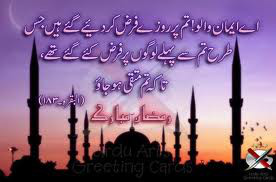
سُوۡرَةُ البَقَرَة يَـٰٓأَيُّهَا ٱلَّذِينَ ءَامَنُواْ كُتِبَ عَلَيۡڪُمُ ٱلصِّيَامُ كَمَا كُتِبَ عَلَى ٱلَّذِينَ مِن قَبۡلِڪُمۡ لَعَلَّكُمۡ تَتَّقُونَ (١٨٣) أَيَّامً۬ا مَّعۡدُودَٲتٍ۬‌ۚ فَمَن كَانَ مِنكُم مَّرِيضًا أَوۡ عَلَىٰ سَفَرٍ۬ فَعِدَّةٌ۬ مِّنۡ أَيَّامٍ أُخَرَ‌ۚ وَعَلَى ٱلَّذِينَ يُطِيقُونَهُ ۥ فِدۡيَةٌ۬ طَعَامُ مِسۡكِينٍ۬‌ۖ فَمَن تَطَوَّعَ خَيۡرً۬ا فَهُوَ خَيۡرٌ۬ لَّهُ ۥ‌ۚ وَأَن تَصُومُواْ خَيۡرٌ۬ لَّڪُمۡ‌ۖ إِن كُنتُمۡ تَعۡلَمُونَ (١٨٤) O you who believe! Observing As-Saum (the fasting)[] is prescribed for you as it was prescribed for those before you, that you may become Al-Muttaqûn (the pious - see V.2:2). (183) [Observing Saum (fasts)] for a fixed number of days, but if any of you is ill or on a journey, the same number (should be made up) from other days. And as for those who can fast with difficulty, (e.g. an old man), they have (a choice either to fast or) to feed a Miskîn (poor person) (for every day). But whoever does good of his own accord, it is better for him. And that you fast, is better for you if only you know.[] (184) 

 The Special Feeling of Ramadan

Ramadan brings out a special feeling of emotional excitement and religious zeal among Muslims of all ages. Though fasting is mandatory only for adults, children as young as eight willingly observe fasting with their elders. Children look forward to the excitement of sighting the moon and eating special meals with their families. Adults appreciate the opportunity to double their rewards from God and seek forgiveness for past sins. As Ramadan emphasizes Muslim brotherhood and community all feel a particular closeness.

Muslims have to change their whole physical and emotional selves during this 30 long days of fasting. A typical day of fasting begins with getting up early, around 4:30a.m. and sharing a meal called Sahur together before the fast begins at dawn, about 5:10a.m. As dawn breaks, the first of five daily prayers, Fajr, is offered.

As the day proceeds, fasting Muslims are constantly bombarded with messages from their stomachs that it is time for breakfast, snack, lunch, and so on. And each time, Muslims remind themselves that they are fasting for the sole purpose of pleasing Allah and seeking his mercy. They offer the second and third prayers during early and late afternoon, respectively.

Fasting helps one to experience how a hungry person feels and what it is like to have an empty stomach. It teaches one to share the sufferings of the less fortunate. Muslims believe that fasting leads one to appreciate the bounties of Allah, which are usually taken for granted – until they are missed!

Throughout the day Muslims are encouraged to go out of their way to help the needy, both financially and emotionally. Some believe that a reward earned during this month is multiplied 70 times and more. For this reason, Ramadan is also known as the month of charity and generosity.

To a Muslim, fasting not only means abstaining from food, but also refraining from all vice and evils committed consciously or unconsciously. It is believed that if one volunteers to refrain from lawful foods and sex, they will be in a better position to avoid unlawful things and acts during the rest of the year.

 Beautiful Sayings Of The Holy Prophet Muhammad (S.A.W)


1. Part of a man's good observance of Islam is that he leaves alone what does not concern him!

2. Lies, darken the mouth and slander infuses the torments of the grave!

3. It is not permissible for a man to keep apart from his brother for more than 3 days!

4. Wherever you are fear Allah; if you follow an evil deed with a good one, you will obliterate it, and deal with people with a good disposition!

5. Let the food cool before eating for there is no Barkat otherwise.

6. The believers whose faith is most perfect are those who have the best character!

7. Modesty and faith are both companions: when one is taken away the other is taken!

8. A man slips more by his tongue than by his foot!

9. There are two favors of which many people are unmindful: health of body and calmness of mind!

10. Do not consider any kindness insignificant, even meeting your brother with a cheerful face (every act of kindness is sadqa) !

11. A good word is better than silence and silence is better than evil talks!

12. A father gives his son nothing better than a good education!

13. Pleasing your parents is to attain Allah's pleasure and disobedience to your parents is expressing disobedience to Allah!

14. Paradise lies under the feet of thy mother!

15. No dutiful son gives his parents a kind look without Allah recording to his credit an approved pilgrimage for every look! (Hajj Sawaab)

What is the Objective of Fasting?

Taqwa

It appears from a careful reading of the Qur’an that the objective of all Islamic “ibadaat” is to earn “Taqwa” : objective of fasting is taqwa (2:183; 2;187), objective of Quranic guidance is taqwa (2:2); objective of : Zakat” is taqwa (7:156; 4:77); objective of “Hajj” is taqwa (2:196).

What is the Meaning of Taqwa?

According to Abdullah Abbas Nadvi, the “Taqwa” has several meanings; being ever conscious of Allah, always aware of God, alert about Allah, having self-control, protection, abstinence from evil action, fear, of Allah, etc. Taqwa is that human quality of power which protects a man from evil.

What is the Benefit of Taqwa?

According to the Qur’an the God-conscious (Muttaqeen) are guaranteed to get: Allah’s love (3:76; 9:4; 9:7), Allah’s proximity and protection (2:194; 9:36), Allah’s friendship (6:51; 45:19); “Baraka” (7:96), ability to distinguish between right and wrong (8:269) and paradise (3:133; 15:45; 44:51; 50:31; 26:90)

How to Earn Taqwa

(1) By doing out acts of worship (Ibadaat) and remembrance (Dhikr) correctly, with full attention and humility (2:238; 29:45, 23:1; 23:9; 6:92; 70:34, 57:16);

(2) By remembering the Hereafter and death (20:102-104;39:69-70;79:40-41;99:1-8);

(3) By loving Allah and respecting His signs; by reading the Qur’an with tadabbur and acting upon it. (2:121;38:29);

(4) By satisfying our natural instincts in a halal way within the limits set by Allah (2:187; 2:229-230; 4:13; 50:4; 65:1);

(5) By choosing our friends correctly (9:119; 6:52; 6:70). By avoiding peer-pressure and ignoring negative environments.

The Qur’an : O believers! Make taqwa and be with the truthful. (9:119) On being asked whom to choose for making friends. The Prophet (Pbuh) said: “Make friends with such persons who remind you of Allah” (Bukhari). And “A person tends to follow the faith of his friend, so be careful who you make friends with” (Tirmidhi)

(6) By taking our religion seriously (6:70)

(7) By making fervent duas and seeking the protection of Allah (25:74).

(8) By reading the Qur’an with understanding (2:121; 38:29)

A Month-Long Training Camp

Ramadan may be regarded as a month-long army training camp, wherein two types of training are imparted: External and internal. The external training is the physiological training in regulating food and drink and changing the eating schedules.

The internal training is the main objective of fasting. This may be examined in 6 parts :

(1) Control of the Tongue:

Let us consider some Hadith on this point:

(1) “He who believes in Allah and the Hereafter should talk what is good or keep quiet.” (Bukhari and Ahmad).

(2) “Whoever can guarantee the chastity of what is between his two jaws-bones (tongue) and what is between his two thighs (private parts), I guarantee paradise for him.” (Bukhari)

(3) “To achieve salvation, control your tongue, confine yourself to your house and reflect over your sins.” (Tirmidhi).

(4) “A believer does not taunt or curse or abuse or talk indecently.” (Tirmidhi).

(5) “A man slips more by the tongue than by the foot.” (Baihaqi).

(6) “The worst man is he who backbites and causes disruption among friends. Those who indulge in gossips and prattles are the worst people among the believers.” (Ahmad).

Control of the tongue is a must for believers; let us practise this in the coming Ramadan and onwards in the future.

(2) What we Hear:

Surah Mulk (67:23) : “Say it is He who has created you and given you hearing, sight and feeling in the heart. But alas! You express little gratitude.”

Surah Bani Isra’il (17:36) : “And pursue not that of which you have no knowledge; for every act of hearing, of seeing or (of feeling in) the heart will be questioned about (in the Day of Reckoning).”

* Note the interesting order : ears first, followed by the eyes and heart. (Recent knowledge in Embryology on the order of formation of organs: was formed complete first in the embryo).

Islam teaches its followers not only to refrain from speaking useless words or backbiting but also not to hear evil and backbiting by others.

(3) Training of the Eyes (sight):

Looking at haram things (for example, staring intently at members of the opposite sex) is not allowed in Islam. “An accidental first glance is permissable; but turn your eyes away immediately” (Muslim) “Do not look at an unknown woman for the second time, for a while you are not to blame for the first glance, you have no right to the second.” (Abu Daud and Tirmidhi).

In the event of such happening, say : “A’oozu-bil-laahi-minash-shai-tanir-rajeem” (I seek refuge in Allah from Satan the accursed). Surah Nur (24:30-31) orders Muslim men and women to lower their gaze in presence of the members of the opposite gender and not to look directly at each other. Surah Araf (7:179) tell us that eyes and ears have been given to humans for using them correctly without being heedless about Allah’s limits. Surah Furqan (25:43-44) warns humans about passions and impulses.

(4) The Whole Body:

Some Muslims have a misconception of fasting and they go into a state of semi-hibernation spending the whole day in bed. Some wake up for salaat, but then return to sleep or lie down immediately after the salaat. Some others become cranky and short-tempered while fasting. Ramadan is really a time for increased spiritual activity and self-control. Reading the Qur’an with understanding is highly recommended.

(5) Iftar and Food:

Breaking the fast must be done on time and with halal food. “Break your fast with dates, or else with water, for it is pure.” (Abu-Daud and Tirmidhi) “Take the pre-dawn (Suhur) meal for there is blessing in it’ (Bukhari and Muslim).

(6) Dua-Maq-bool:

It is narrated by Abdullah ibn Umar that the Prophet said : “At the time of Iftar, the duas of the fasting person are accepted”. Just before Iftar, while waiting with wudu (ablution) for the time of sunset, make “duas”;

“Allahumma-innika-’afoowwun-tuhibb-ul-’afwa-fa’fu-annee.” (O Allah! You are the Forgiver; you love forgiveness; so forgive me).

Make Iftar

(break the fast with this dua)
“Alla-humma-laka-soom-tu-wa-’ala-riz-qika-af-tar-tu” (O Allah~ It is for you that I observe fasting and it is with your blessing that I break it).

“There are two occasions of joy for one who fasts, one when he breaks the fast and the other when he will meet his Lord.”

“As a believer is a person who first fulfils Allah’s order and then starts to worry about any shortcomings’ and then seeks forgiveness from Allah.” So, let us turn this Ramadan into an occasion for earning the forgiveness of Allah and the cleansing of our past sins.

It should be noted that there are two things that Allah claimed to be his own, one is the Kaabah and the other is siyam (fasting).

In a Hadith-Qudsi narrated by Abu-Hurairah, the Prophet said: “Allah the Majestic and Exalted said : Every good deed of man will receive ten to seven hundred times reward, except seeyam, for it is for Me and I shall reward it as I like.” (Muslim)
 

 The Prophet Muhammad's (peace be upon him) Khutbah for Ramadan:

Ibn Khuzaima reported on the authority of Salman al-Farisi that the Prophet (saaw) delivered a Khutbah on the last day of Sh'aban saying:

"O people: You are about to enter the shadow of a great blessed month. A night therein is better than a thousand months. Allah (swt) made fasting during this month an obligation and encouraged people to perform extra prayers. during its nights.

Seeking nearness to Allah (swt) through a good deed would be considered like performing an obligatory act of worship. In turn, performance of an obligatory act of worship during this month would be rewarded seventy times more than during any other month.

It is the month of patience, and the reward for patience is Jannah. It is the month of comforting others, and the month during which believers would enjoy plentifulness.

The Prophet (saaw) went on to say:" Make sure you frequently do four things, two of which would please your Lord and the other two are indispensable for your salvation in the Hereafter. As for the two things that would please your Lord, they are: testifying to the oneness of Allah (swt) and seeking repentance. And the other two are: asking Allah the favour of entering Jannah and seeking refuge in Him from the Hell Fire."

And here is another hadith worth keeping in mind, inshaAllah. The Prophet said, "Whoever does not give up false statements (i.e. telling lies), and evil deeds, and speaking bad words to others, Allah is not in need of his leaving his food and drink (fasting)." Sahih Al-Bukhari Hadith 8.83, Narrated by Abu Huraira (ra).

Make the Most of the Last Ten Days

Greater Than a Thousand Months

"Most certainly We have revealed it in the Night of Power; And what will inform you what is the Night of Power? The Night of Power is greater than a thousand months; The angels and Jibraeel (alayhis salaam) descend in it with the permission of your Lord with all decrees; Peace prevails till the rising of dawn." (Surah Qadr)

The Night of Power is indeed unique in every sense. Most befittingly it has been afforded exclusively to the Ummat of Rasulullah (sallallahu alayhi wa sallam), which is in itself unique from all previous Ummats (nations). The magnanimous rewards and benefits of this auspicious night also dictate that its occurrence remains partially disclosed. Allah Ta’ala alone knows the true date of Laylatul Qadr and those wanting to earn this night have to vigilantly search for it in the odd nights of the last ten nights of Ramadaan.

The person who finds this night and observes it appropriately earns himself a great fortune, a fortune that will only be realised and appreciated in the hereafter. It has been the practice of Rasulullah (sallallahu alayhi wasallam), the Sahaba (radiyallahu anhum), Mashaikh, Ulama and generations of Muslims too observe I’tikaaf (seclusion) in the Masjid during the last ten days of Ramadaan in search of this auspicious night.

Ubada bin Saamit (radiyallahu anhu) reports that he asked Rasulullah (sallallahu alayhi wasallam) about "Laylatul Qadr". Rasulullah (sallallahu alayhi wa sallam) replied: "It is in Ramadaan, during the last ten days, on the unevenly numbered nights, either the 21st 23rd, 25th, 27th, 29th or the last night of Ramadaan. Whosoever stands in 'Ibadah' (worship) on this night, with sincere faith and conviction of gaining reward, his previous sins will be forgiven. Among the signs of this night is that it is a serene, quiet, shining night, neither hot, nor cold but temperate as if a moon is shining clear, and no meteors are shot at the 'Shayateen' on that night; it lasts until the break of dawn. Another sign is that in the morning, the sun rises without any radiant beams of light, appearing rather like the moon in its fullness. On that day, Allah Ta’ala prohibits the 'Shayateen' from rising up with the sun." (Fazaail A’maal)

May Allah Ta’ala grant us all this auspicious night.

I'tikaaf in the Last Ten Days of Ramadan

The observation of I’tikaaf during the last ten days of Ramadaan was a practice which Rasulullah (sallallahu alayhi wasallam) observed assiduously throughout his life in Madinah Munawwarah. The devotion that Rasulullah (sallallahu alayhi wasallam) attached to this beautiful Sunnah can be understood by the fact that on one occasion when he was unable to observe I’tikaaf, due to being out on an expedition, he observed twenty days I’tikaaf the following year.

The spiritual benefits that are attained from this wonderful Sunnah are innumerable. Who can possibly describe the spiritual ecstasy experienced from communicating in solitude with Allah Ta’ala, while one is a guest in the Masjid with the Malaaikah (angels) as his companions.

Undisturbed seclusion in the Masjid is indeed an excellent way to exclusively engage oneself in personal communication with Allah Ta’ala. Away from the comfort of the home, family members and daily work routine, I’tikaaf enhances one’s proximity to Allah Ta’ala and secures the internal and external purification of the Mu’takif .

Remember! Such precious moments come but once a year - and who can guarantee being present for the next Ramadaan.

Hazrat Abdullah Ibn Abbas (radiyallahu anhuma ) reports that Rasulullah (sallallahu alayhi wasallam) said; "Whosoever performs I’tikaaf for a day thereby seeking the pleasure of Allah Ta’ala, Allah Ta’ala will open three trenches between him and the fire of hell, the width of each (trench) being the distance between the heaven and the earth." (Tabraani)

The Ulama, considering the importance attached by Rasulullah (sallallahu alayhi wasallam) to this noble practice, have ruled it necessary that this Sunnah be observed by at least one member of every locality. Failure to do so will result in the entire locality being guilty of neglecting this great sunnah

 Things that break (and do not break) the fast

SAWM (Fasting)
by Shaykh Muhammed Saleem Dhorat
Taken from idauk.org


O you who believe! Fasting is prescribed to you,as it was prescribed to those before you,that you may (learn) self-restraint (Holy Qur'aan 2 : 183)

Sawm (fasting) means to refrain from eating, drinking and cohabiting from subha sadiq (early dawn) to sunset with a niyyah (intention) of observing fast.

Fasting in the month of Ramadhaan is one of the five pillars of Islaam and is fardh (compulsory) upon every muslim who is sane and mature. Fasting has many physical, moral, and social benefits. However, Allah has made fasting compulsory so that we become pious and God-fearing.

Fasting will not be valid without niyyah. It is not necessary to express the niyyah in words. However it is preferable to recite Allahumma asoomu laka ghadan (O Allah tomorrow I shall be fasting for you only). In the case of Ramadhaan, it is better to make niyyah in the night. However, should a person fail to do so, then it is permitted to make the niyyah during the day before zawaal (midday).

MUSTAHAB (DESIRABLE) ACTS IN FASTING
1. To eat sehri (the meal before subha sadiq).
2. To delay the sehri up to a little before subha sadiq (early dawn).
3. To break the fast immediately after sunset.
4. To break the fast with dates. If dates are not available then with water.
5. To recite this du'a at the time of breaking the fast :-
Allahumma laka sumtu wa bika aamantu wa ala rizqika aftartu
O Allah! I fasted for You and in You do I believe and with Your provision (food) do I break my fast.

THINGS MAKROOH (DETESTABLE) WHILE FASTING
1. To chew items such as rubber, plastic etc.
2. To taste food or drink and spit it out.
3. To collect one's saliva in the mouth and then swallow it.
4. To clean teeth or mouth with tooth powder or toothpaste.
5. To complain of hunger or thirst.
6. To quarrel, argue with filthy words.

THINGS THAT BREAK THE FAST
1. To eat, drink or indulge in cohabitation intentionally.
2. To burn agarbatti (incense) and inhale its smoke.
3. If water goes down the throat while gargling.
4. To vomit mouthful intentionally.
5. To swallow vomit intentionally.
6. To swallow something edible, equal to or bigger than a grain of gram, which was stuck between the teeth. However, if it is first taken out of the mouth and then swallowed, it will break the fast whether it is smaller or bigger than the size of the grain.
7. To drop oil or medicine into ear or nose.
8. To swallow the blood from gums with saliva. However, if the blood is less than the saliva and its taste is not felt then the fast will not break.
9. Snuffing.
10. To eat and drink forgetting one is fasting and thereafter, thinking that the fast is broken to eat and drink again
11. Smoking.
12. To apply medicine to the anus.
13. For women to apply medicine to the urinary organs.
14. To swallow intentionally a pebble, piece of paper or any item that is not used as food or medicine.

In all the above circumstances, only a single fast will become qadha except in the case of number one (1), where qadha and kaffarah both will become obligatory. (Consult an aalim regarding the rules of kaffarah).

THINGS THAT DO NOT BREAK THE FAST


1. To eat, drink or indulge in cohabitation in forgetfulness.
2. To vomit without intention.
3. To vomit intentionally less than mouthful.
4. To have a wet dream.
5. To oil the hair.
6. To use surma (collyrium) in the eyes.
7. To drop water or medicine in the eyes.
8. To clean teeth with wet or dry miswaak (a stick used for cleaning teeth).
9. To apply or smell attar (perfume).
10. To swallow a fly, mosquito, smoke or dust unintentionally.
11. To swallow one's saliva or phlegm.
12. Water entering the ears.
13. To take an injection.

SUNNAHS IN THE MONTH OF RAMADHAAN
1. To observe taraweeh.
2. To increase the recitation of the Holy Qur'aan.
3. To observe i'atikaaf during the last ten days of Ramadhaan.

Sawm (Fasting)
Sawm is a shield, as long as he (the fasting person) does not tear it up. (Nasa'ee)
Fasting is a protection from Shaytãn or from Allah's punishment in the Hereafter. One who indulges in sins whilst fasting such as lying, backbiting etc., they become the cause of the fast becoming wasted.
All good deeds are for the one who renders them, but Fasting. Fasting is exclusively for me (Allah). (Bukhãri)
Fasting is a shield and a powerful fortress. (Ahmad, Bayhaqi)
I swear by that being in whose possession is the life of Muhammad! The odour of the mouth of a fasting person is sweeter to Allah than the fragrance of musk.(Bukhãri)
Fasting is exclusively for Allah, the reward of it (being limitless) no one knows besides Allah. (Tabrãni)

Suhoor
Verily, Allah and His angels send mercy upon those who eat suhoor. (Tabrãni)
Eat suhoor because in suhoor lies barakah. (Mishkãt)

Iftãr
Whosoever gives something to a fasting person in order to break the fast, for him there shall be forgiveness for his sins and emancipation from the fire of Jahannam; and for him (the one who gives) shall be the same reward as for him (whom he fed), without that person's (the one who was fed) reward being diminished in the least. (Ibne Khuzaymah, Bayhaqi)

Whoever gave a person, who fasted, water to drink, Allah shall give him a drink from my fountain where after he shall never again feel thirsty until he enters Jannah. (Ibne Khuzaymah)

The fasting person experiences two (ocassions) of delight: at the time of iftãr and at the time he will meet his Rabb.(Bukhãri)Not a single prayer made by a fasting person at the time of breaking fast is rejected. (Ibne Mãjah)

DUAS of RAMADAN


DUA FOR SIGHTING MOON OF RAMADAN

DUAS OF SEHR & IFTAR TIME

DUAS OF ALL 3 ASHRA OF RAMADAN

DUA OF TARAWIH

JAZAKALLAH UL KHAIR

Make this the best Ramadan you have ever had insha'Allaah!

This "Ramadan Resource" contain Important articles, lectures, book, website link and other resourceful information to prepare you for Ramadan so you are able to take maximum benefit from this Mubarak month. Please read the notes to gain more knowledge about Ramadan. InshaAllaah!

Start Preparing for Ramadan! :-)
 

The name "Ramadan" had been the name of the ninth month in Arabian culture long before the arrival of Islam; the word itself derived from an Arabic root rmḍ, as in words like "ramiḍa" or "ar-ramaḍ" denoting intense heat,[2] scorched ground and shortness of rations. In the Qur'an, God proclaims that "fasting has been written down (as obligatory) upon you, as it was upon those before you". According to the earliest hadith, this refers to the Jewish practice of fasting on Yom Kippur


 PLEASE VISIT ALL THE CONTENTS OF THIZ SPECIAL SECTION OF " IMAAN  HAI RAMADAN"..AND INCREASE YOUR KNOWLEDGE..

جزاکاللہ ال خیر

 JOIN OUR SPECIAL

"Imaan Hai Ramazan ایمان ہے رمضان"

ON FACEBOOK ALSO

Follow LOVEISLAM786 on Twitter

 Ramadan is here, The month that is blessed;
Ramadan is here, The month we love best.
The month in which the Qur'an was sent;
A time of great blessing in which to repent.
Fasting for Allah is a great Muslim deed;
Controlling desires and Suppressing greed.

Ramadan is coming, Increase your Iman(faith).
Ramadan is coming, Recite the Qur'an.
Take "Suhoor" in the dead of the Night;
No eating or drinking during the daylight.
Refrain from bad deeds and repent your soul;
The pleasure of Allah is our only goal.

Even if there is hunger, remember your Lord
And wait until 'Iftar' to earn your reward.
Fasting is one of the gifts of Allah
Given to believers to increase 'Taqwah' (piety).
We pray to Allah to put right our hearts;
Ask for forgiveness from Allah and make a new start.

Raising our hands we ask for his 'Rahmaa';
Hear us our Lord and grant us 'Jannah'.

 JIsne bana dia her gher ko Gulistan
chala jayega 2 dino main ye mehman
Tohfay main de jaraha hai ye Eid sbko...
Alvida Alvida Mah-e-RamzanDate: 09-September-2010 By: Admin


Aey Maah-e-Ramzan aahista chalna,
Hamen khasa Qarz chukana hai,
Kuch khawab hain jinko likhna hai,
or Tabeeron ko pana hai,
Kuch log hain ujray dil waly,
Un sb main pyar basana hai...
or khizan Raseeda angan main,
ab aman ka beej lagana hai,
Kuch toba krni baqi hai,
or Rab ko hamain manana hai.
Aey Maah-e-Ramzan aahista chalna,
Hamen khasa Qarz chukana hai.Date: 06-September-2010 By: Admin


Zaberdast offer in Ramzan Inshallah
ik Naya zaberdast FREE PACKAGE!

1 neki pr 70 nekiyan Free
1 hrf tilawat pr 10 se 70 se 700 nekiyan bilkul Free
1 namaz pr 70 namazon ka Free Sawab
Nafal nimaaz ka ajr farz k braber

Yad rakhain ye package 1st Ramzan se 30 Ramzan tak valid hoga

Is OFFER se ziadah se ziadah Faida hasil karian.
Pata nahi phir Moqa miley ya nahi.Date: 31-August-2010 By: Admin


Wife: is saal k rozey rakho ge?
Husband: Nahi
Wife: or Taravi parhoge?
Husband: Mushkil hai
Wife: or Aftaari karoge?
Husband: Han! ab itna bhi kafir nahi hoon.Date: 31-August-2010 By: Admin


May the noor of this blessed Mont illuminate ur heart,
Mind & Soul & may ur all prayers be answered (Ameen)

-----------

|""|""|""|""|
|"\(',')/|""|
|__|),(__|__|

Kitna kaha tha k beta chup ja
ab reh 30 din ander.Date: 31-August-2010 By: Admin


Dosto apko ik zaroori bat batani hai
taa k pichle sal ki tarha apko afsos na ho.

Ramzan aa gia hai jisney b meri aftaari karwani hai
pehle bta kr time le lain.Date: 31-August-2010 By: Admin


Ay Allah!
Mujhe Ramzan k liye Salamat Rakh or Ramzan ko mere liye Rehmat bana or Maqbol bana Salamat rakh (Ameen)Date: 17-August-2010 By: Admin


Tum ebadat k lamhom main mera 1 kaam krna,
Her sehri se pehle, her Namaz k bad,
Her Iftaar se pehle, Her Rozey k bad,
Sirf apni DUA k kuch alfaaz mere naam krna.
Happy RamzanDate: 17-August-2010 By: Admin


In this world you buy things with currency but on the day of judgment only your good deeds can buy you heaven. It’s the right time to start collecting this currency as its Ramadan Mubarak!!


Let’s Make Allah Happy
Let’s Celebrate Ramadan
With Our Heart and Soul!!!!


The holy month to earn loads of nekiyaan has just arrived!! Make the most of it!! Ramadan Mubarak!!


When we present anything to our loved ones we try to buy the best thing and decorate it nicely to make him or her happy. Its time to present something to Allah our creator, so present your fast this Ramadan with your heart and soul. Happy Ramadan!!!!


To Each and Every Musalmaan
A Very Happy Ramadan!!!


All Muslims look forward to the holy month of “Ramadan” which is full of goodness and blessings. Both males and females start to fast a little earlier than sunrise and break it at sunset and also stop themselves from all the evil and bad things and habits throughout the fast. Rich people get a chance to realize what hunger and thirst is and at the same time come forward to help the poorer. We can make Allah happy in various ways in the month of Ramadan as we fast for Allah and He will give us reward for our fasting. Be really good not only this month but at all the time.